Project Development
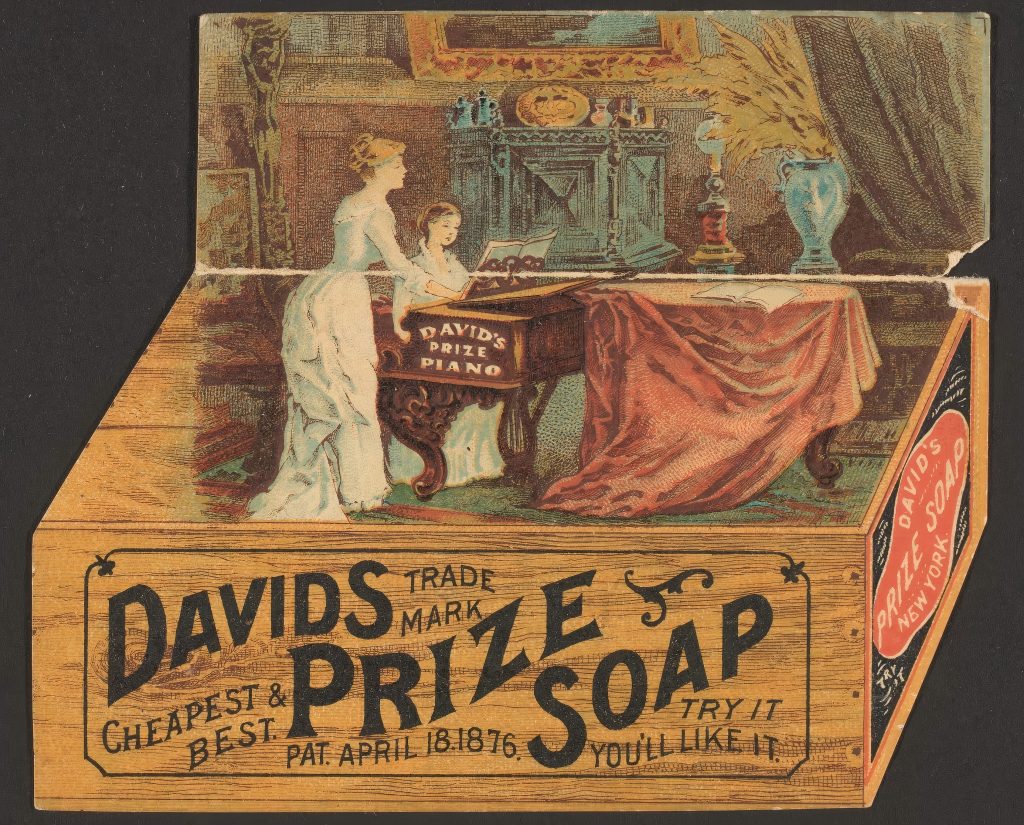
Week 1 ↗
Testing three ways to compare 26 trade-card images: grouping them by subject, sorting them by product visibility, and comparing originals with cropped details.
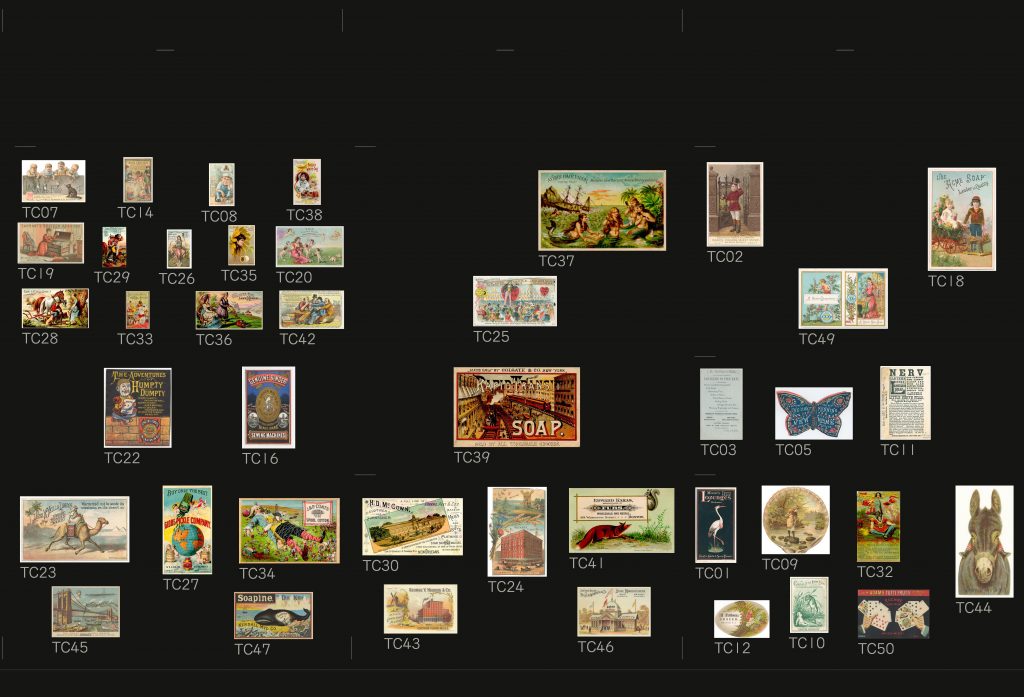
Week 2 ↗
Expanding the set to 50 trade-card images and arranging them in a grid to compare how clearly each product is shown and what draws the eye in each advertisement.
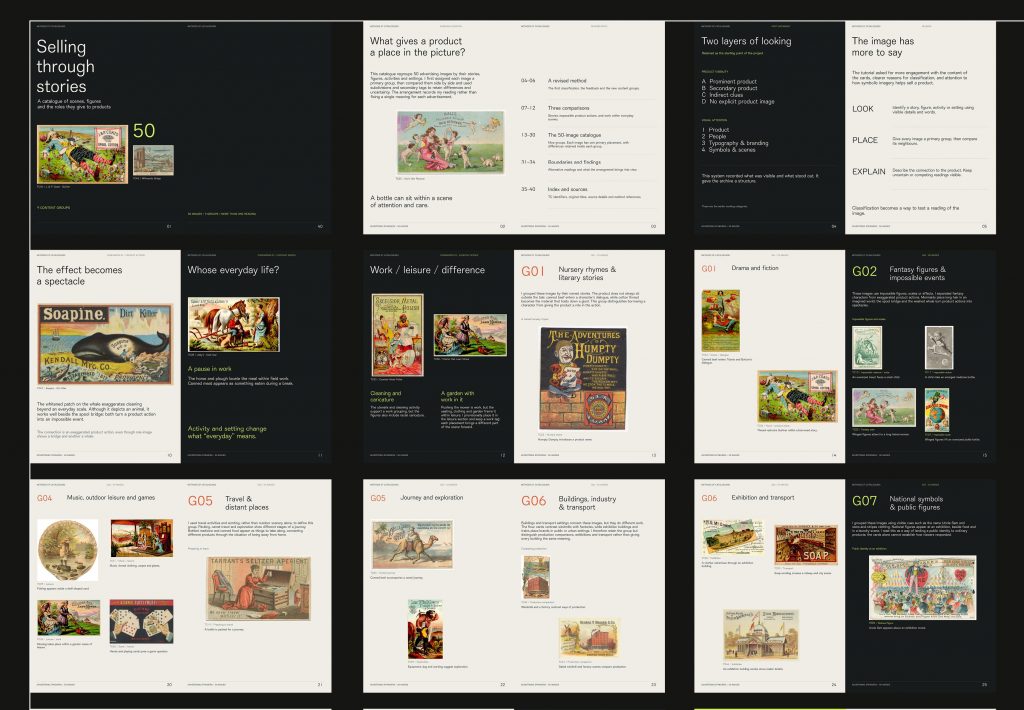
After Feedback ↗
In response to feedback, I regrouped 50 trade-card images by what they depict and brought the new groupings and comparisons together in a booklet.
Written Response — Methods of Cataloguing
What Belongs Together? An Inventory of Classification Criteria
I examine the fourteen-part animal list that Foucault (1994) quotes from Borges in the preface to The Order of Things. So I regroup its entries according to the information they provide, and retain the original letter labels and paraphrase the entries below.
1. Relations with people — a, c, g
Animals owned by the emperor; tame animals; lost or homeless dogs.
These entries describe animals through their relationships with people. One refers to ownership, another to behaviour towards people, and the third to being lost or without a home. I use these relationships as their shared basis for grouping.
2. Bodily condition and behaviour — b, d, i, m
Preserved bodies; piglets still feeding on milk; agitated animals; animals that recently broke a pitcher.
These entries describe physical conditions, stages of life and actions. Because they include both lasting conditions and brief actions, I use a broad heading to bring them together for comparison.
3. Imagined creatures — e, f
Sirens; mythical animals.
I group these together because both refer to imagined creatures. Sirens are an example of mythical animals, so the two entries overlap.
4. Images and viewing distance — k, n
Animals depicted with a fine brush; animals appearing fly-like from far away.
These entries describe how animals appear to someone. I put them together to compare two conditions of seeing: how an image is drawn and how far away the viewer stands.
5. Counting and listing — h, j, l
Animals already covered by the classification; quantities beyond counting; et cetera.
These entries concern what the list includes, how many animals there are, and what it leaves unnamed. The first can include all the other entries. The second gives no usable number. The third, “et cetera”, means there are other cases, but does not name them. I group these entries by what they say about the list’s contents and limits.
The original list puts them one after another, with a letter beside each. But some describe who owns an animal, while others describe its condition or how it appears. I group entries that describe similar things together, so readers can see what they have in common and where they differ.
References
Foucault, M. (1994) ‘Preface’, The order of things: An archaeology of the human sciences. New York: Vintage Books. Available at: https://foucault.info/documents/foucault.orderOfThings.en/ (Accessed: 16 November 2026).